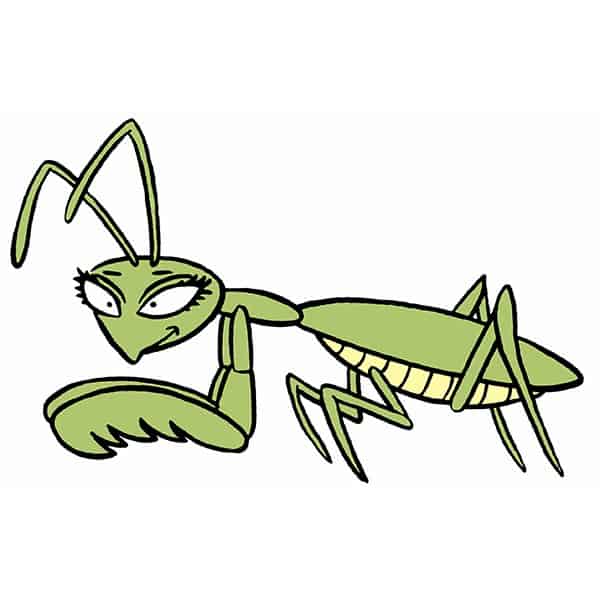
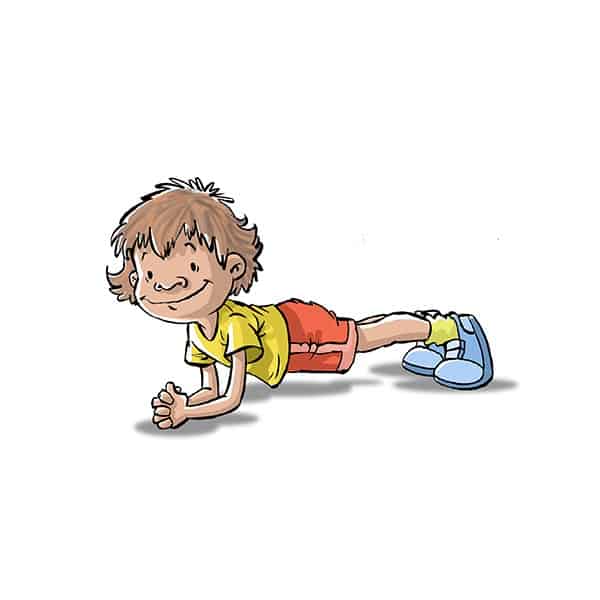
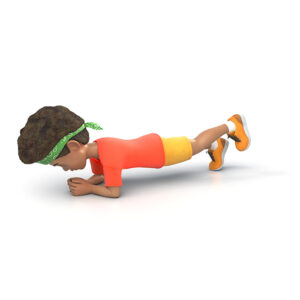
Praying Mantis Plank

  • Strengthens abdominals, which assists with maintaining upright posture (e.g. standing upright or sitting at a desk to complete work)
  • Strengthens the upper limb (which is beneficial for handwriting and fine motor control).
  • Provides deep pressure proprioceptive input that can be useful to maintain alertness levels ready for learning.

Uses

  • This is a great exercise to do just before handwriting or other fine motor activities (e.g. using cutlery, doing up buttons, tying shoelaces, threading beads).  This exercise activates the core and upper limb muscles (shoulder, elbow, wrist, hand and fingers) so they’re ready to perform challenging fine motor activities.
  • Encourage children to do this exercise against a wall or on the floor when entering the classroom in the morning, after breaks, or as a transition activity, for a quick sensory regulation activity.

Instructions

  1. Lie on your tummy and switch your tummy muscles on
  2. Lift your body up to balance on your forearms and toes
  3. Keep your body straight (like a plank of wood)
  4. Hold for as long as you can

Watch Points

  • Body in a straight line (make sure hips aren’t not up higher or sagging down)
  • Tummy muscles switched on
  • Shoulders down and neck relaxed

Do the Praying Mantis Plank…

  • On your knees (instead of toes)
  • With your elbows up on something higher (for example on a wall, table or a sturdy chair)
  • With a ball under your tummy. This makes the exercise easier for your abdominals but more challenging to balance.

Seated:

  • Put the palms of your hands together. Push them together strongly for as long as you can

Progress Tracker

For how long can you hold the praying mantis plank?