Quick Sticks
The facilitator says the name of a GymZOOnasium exercise. All the participants do their best to remember and start doing that exercise as quickly as they can.
The participants continue doing that exercise until the facilitator says the name of the next exercise to do.
 Musical Statues
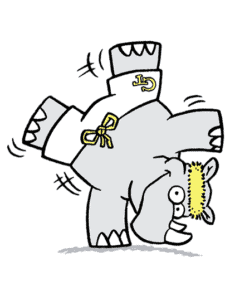
Play some music and have the participants dance to the music. Press ‘pause’ and name a GymZOOnasium exercise.
The first participant to start doing that exercise earns a point. All the participants keep doing that exercise until you start the music again. Repeat until someone achieves a certain number of points to win the game.
Simon Says
The same as the usual Simon Says game, but using the GymZOOnasium exercises. E.g. “Simon says… do three lizard lifts” or “Simon says… freeze like a fish”.
Try to catch participants out by intermittently giving an instruction without the “Simon says” preface, or by you doing a different exercise to the one you instruct them to do.
Lucky Dip
Put GymZOOnasium flashcards or exercise names into a lucky dip container. Draw one out and have the children do that exercise as well as they can for 1 minute.
Sequences
Challenge students to recall and perform movement sequences (e.g. do 6 lion lunges, 4 goanna climbs and then downward dog while you count to 12).
This is very beneficial for improving memory, and motor planning and sequencing ability. You can provide the list verbally; or written (but have them turn over the page before they start the exercises).
Dice roll
For a fun variation of Sequences you can use GymZOOnasium flashcards (or exercise names) and a dice. Without looking, select a flashcard and roll the dice.
Participants do the chosen exercise for the number of seconds they’ve rolled (e.g. rolling a 1 = 10 seconds, 2 = 20 seconds, 3 = 30 seconds and so on).
Progressively increase the number of cards selected and dice rolled, for the children to recall and perform a sequence of exercises.
E.g. If you selected the Kangaroo Jump flashcard and rolled a 2, then selected the Fish Freeze flashcard and rolled a 5, participants would need to remember the exercises and numbers, and would do Kangaroo Jump for 20 seconds and then Fish Freeze for 50 seconds.
 Guess the Animal
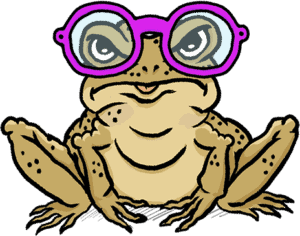
One participant chooses a GymZOOnasium animal and gives the class 3 clues about that animal (e.g. it’s nocturnal, furry and eats eucalyptus leaves).
Once the class guesses the animal correctly they all do that animal exercise together (e.g. for 30-60 seconds). Then the person who guessed correctly gets to choose the next animal.
GymZOOlympics Team Challenge
See GymZOOlympics for instructions.
Arrange students into teams of four and challenge them to do the GymZOOlympics (eight exercise assessments) as a team. Each team needs to decide which participant from their team will complete each of the assessment exercises.
One representative from each team will participate in each exercise, with teams needing to make sure that each student completes two of the exercises. The team’s results will be recorded on one ‘My Achievements Handout’. Instruct students to analyse their team members’ unique strengths to plan a strategy for achieving the best possible outcome for their team.
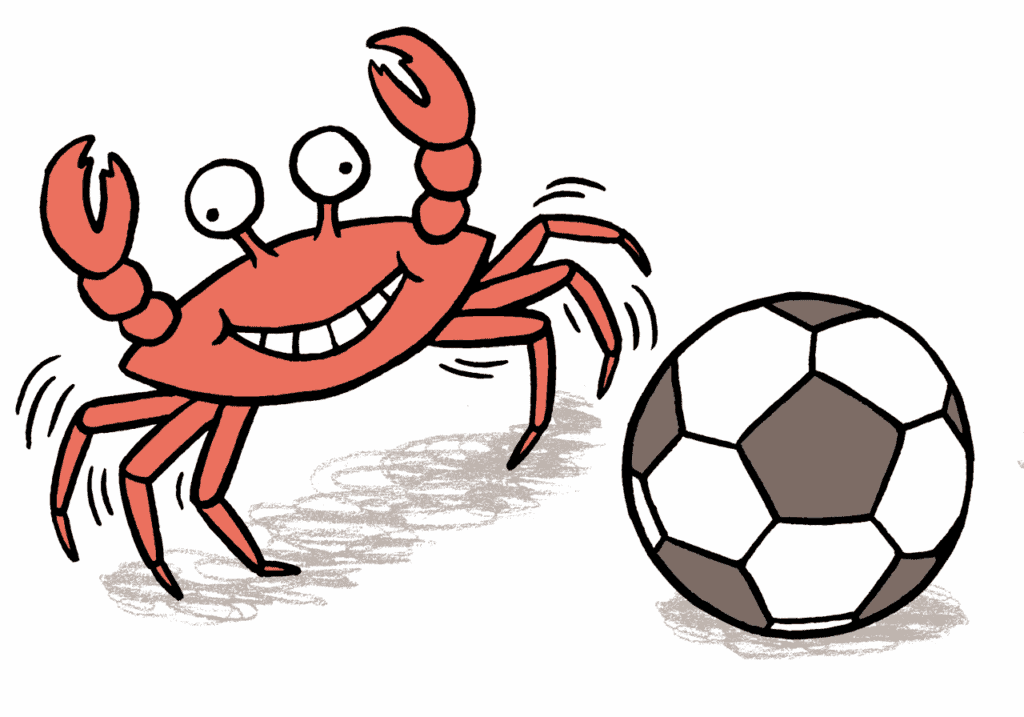
Crab soccer
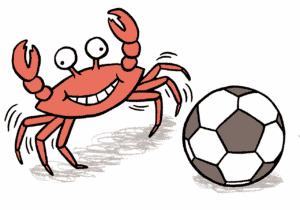
Set up a very small soccer field with a goal at each end and 2 even teams. For safety, ensure all participants are wearing sneakers (and ideally also shin pads).
Start a basic soccer game with the main rules being that you can only move or touch the ball when you’re in the crab position; you can only touch the ball with your feet; and you need to be careful not to step on anyone’s fingers.
Animal relays or races
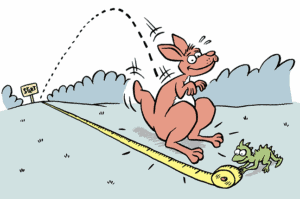 The same as a usual relay or race, except instead of running, the facilitator will name a particular animal for participants to move like or the children can choose their own.
This game works best with the kangaroo jump, gecko creep, giraffe reach (walking on tippy toes), penguin waddle (walking on heels), gorilla squat (moving in a squatted position), caterpillar crawl, lion lunge (walking lunges), crab crawl (moving like a crab- keeping bottoms up), bunny hop, chimpanzee swing and frog squat.
GymZOOnasium obstacle courses
Plan, set up and complete a GymZOOnasium obstacle course, using GymZOOnasium flashcards, obstacle course equipment and/or natural obstacles.
Stuck in the Mud
The same as the usual ‘Stuck in the mud’ game except when participants get tagged they do one of the GymZOOnasium exercises until they’re freed by another participant. The facilitator can change the nominated exercise as often as they like.
Ideal exercises to use for this include Flamingo Balance, Crab Crawl, Downward Dog, Pterodactyl Take-off, Dragonfly Zoom, Fish Freeze, Starfish Superstar, Lizard Push-up, Goanna Climb, Koala Balance, Praying Mantis Plank or Toad Sit.
What’s the Time Mr Wolf
Participants all start at a starting line. One participant is nominated to be the wolf and they stand about 10m from the line facing away from the other participants.
The wolf nominates one of these GymZOOnasium transition movements (Bunny Hop, Caterpillar Crawl, Chimpanzee Swing, Crab Crawl, Frog Squat, Gecko Creep, Kangaroo Jump, Lion Lunge).
The participants all say together “What’s the time Mr Wolf?” The wolf answers a time (e.g. 3 o’clock) and participants take that number of steps towards the wolf doing the nominated animal movement (e.g. 3 steps in the Crab Crawl position; or 3 Kangaroo Jumps).
The participants’ aim is to tag the wolf, and the participant who does becomes the new wolf. If the wolf answers that the time is “dinner time” the wolf turns around and tries to catch one of the participants before they make it back to the starting line (but the wolf needs to chase them by moving on all fours like a wolf).
The participant who gets tagged becomes the new wolf.
 * After participating in GymZOOnasium team activities (e.g. Crab Soccer, Animal Relays or Obstacle Courses) ask students to describe how their strengths, and those of the other participants, contributed to successful outcomes.
* Any of the above Indoor Games can also be done outdoors. Outdoor play provides added benefits for children’s mental wellbeing and connection with nature.