Strengthens oblique abdominals and upper limb. This strength is important for upright posture and body control, which are building blocks for difficult gross motor and fine motor movements.
Provides deep pressure proprioceptive input to the muscles and joints, which assists children to feel calm, alert and ready to learn.
This is a great exercise to do just prior to handwriting or other fine motor activities, because it activates the core and upper limb muscles (shoulder, elbow, wrist, hand and fingers).
Instructions
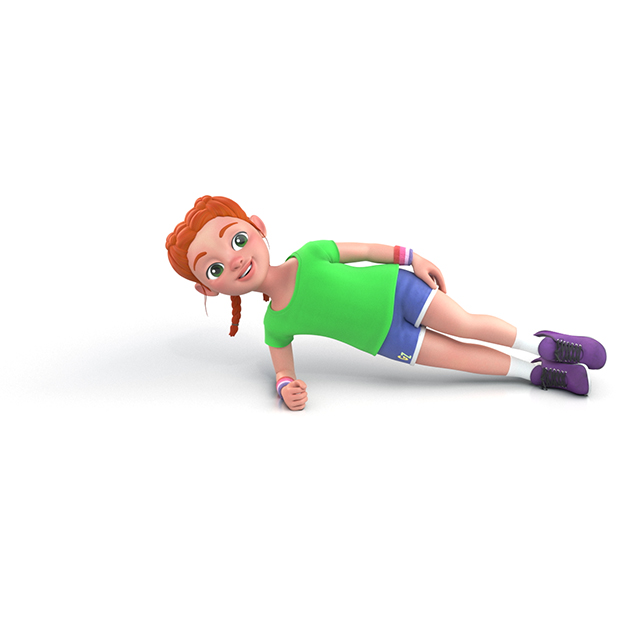
Balance on your side, with one forearm and one foot on the floor
Lift your hips off the floor and keep your body straight
Freeze for as long as you can, then switch sides
Watch Points
Lower elbow under your shoulder
Abdominal muscles squeezed
Body straight all the way from shoulders to hips to feet
Top shoulder above the lower one, rather than leaning forwards
Normal breathing (not holding your breath)
Modifications
More Challenging
Multi-Sensory
Ball Skills
Fine Motor
Do the Fish Freeze with your knees bent and your bottom knee on the floor.
Standing:
Stand side-on to a wall. Place your closest hand at shoulder-height on the wall. Take a large step away from the wall until your arm is straight and your feet are further away from the wall than your shoulders. Do the Fish Freeze in this position (keeping your arms and body straight), leaning against the wall.
Seated:
Push your arm out to your side, against a wall or parent’s hand.
Seated:
Lean your body slowly over to one side, keeping your back long and tummy strong. When you lean to the left you will feel the muscles on the right side of your tummy switch on. Lean for as long as you can and then change sides. To make it more challenging, stretch your arms above your head.
While doing the Fish Freeze, lift your top leg and hold it up (to make your fish tail bigger)
While doing the Fish Freeze, use your top arm to draw other animals swimming past you in the sea.
Not Applicable
While doing the Fish Freeze:
Hold a pencil in your top hand. Roll the pencil between your thumb and each of your fingers, one by one.
Touch your thumb with each finger, starting with your pointer, moving to your little finger, and then in reverse. Have your teacher or partner make up different finger-touching combos for you to copy.
Progress Tracker
For how long can you hold the fish freeze on your left arm?