Crosses the midline of the body with both the arms and legs, which promotes coordination and communication between the left and right hemispheres of the brain, and encourages bilateral coordination. Crossing the midline is important for the process of developing a dominant hand and development of fine-motor skills
Coordination activities such as this prepare the brain for complex tasks and learning
Use this stretch as a transition to classroom tasks after lunch. This complex motor task can support children’s concentration and attention in the classroom.
Instructions
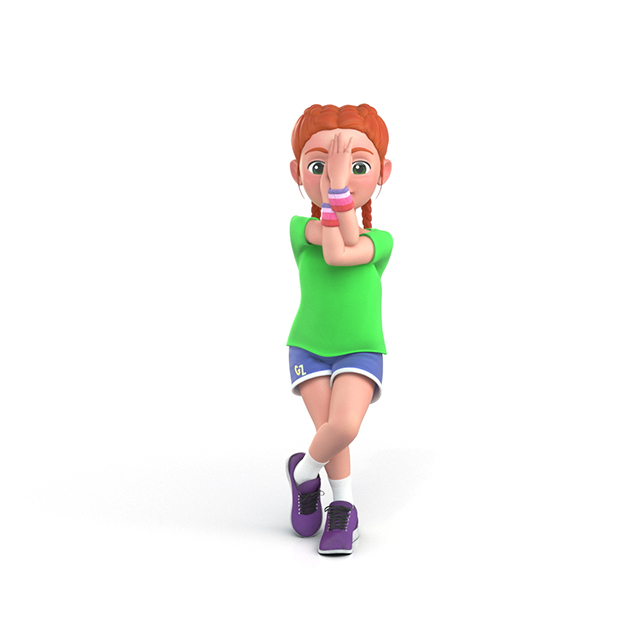
Stand with your arms crossed in front of you to make an X
Bend your elbows
Twist one arm around the other and touch your palms together
Reach your elbows forward and up
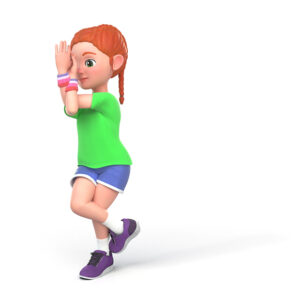
Cross one leg over the other and bend your knees. Touch your toes on the floor as needed to help you balance.
Hold for 5 slow breaths, then swap sides
Watch Points
Standing tall and chest upright
Shoulders down and neck relaxed
Focusing on something still (something at eye height in front of you), to help with balance
Breathing deeply (not holding breath)
Modifications
More Challenging
Multi-Sensory
Ball Skills
Fine Motor
Standing:
Do the Eagle Twist standing normally on two feet (instead of lifting or crossing your feet).
Raise your left arm out in front of you. Use your right forearm to gently pull your left arm across your body and towards your chest. Hold for 5 deep breaths then switch sides.
Seated:
Do the upper body part of the Eagle Twist only.
Raise your left arm out in front of you. Use your right forearm to gently pull your left arm across your body and towards your chest. Hold for 5 deep breaths then switch sides.
Try the Eagle Twist:
With eyes closed, to challenge your balance
With your left foot lifted off the floor and twisted around your right leg
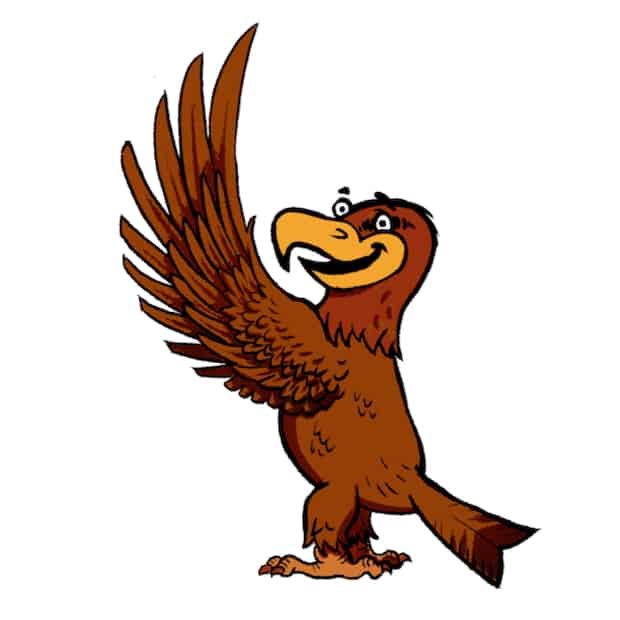
Imagine you’re an eagle perched up high in your nest. Feel the wind blowing on your feathers. What might you see around you? What might you hear?
 Try the Eagle Twist: